
Ecuador celebrations offer a colorful mix of Indigenous heritage, Spanish influences, Afro-Ecuadorian culture, religious traditions, music, food, dancing, and community gatherings. From lively Carnival festivities to the meaningful Inti Raymi and the distinctive Mama Negra festival, celebrations across Ecuador reflect the country’s cultural diversity. For families and communities, how Ecuador celebrations bring families together can be seen through shared meals, music, traditional clothing, parades, and local customs.
Ecuador has more than 500 traditional festivals celebrated throughout the year, according to Ecuador’s official tourism promotion site. These events vary significantly by region, making Ecuador an especially interesting destination for people who enjoy learning about cultural celebrations.
What Are Ecuador Celebrations?
Ecuador celebrations are cultural, national, religious, seasonal, and community events held throughout the country. They can include public holidays, local festivals, family gatherings, traditional dances, parades, music, special foods, and ceremonies.
Because Ecuador has Indigenous, Spanish, African, and other cultural influences, its celebrations can look very different from one region to another. For example, the official Ecuador Travel site highlights Carnival, Inti Raymi, the Diablada of Píllaro, and Mama Negra as important traditional festivities.
For visitors and US families exploring cultural themes, these traditions can also inspire respectful celebration ideas at home. A family might prepare Ecuadorian-inspired food, learn about traditional music, decorate with the colors of the Ecuadorian flag, or organize a cultural learning evening.
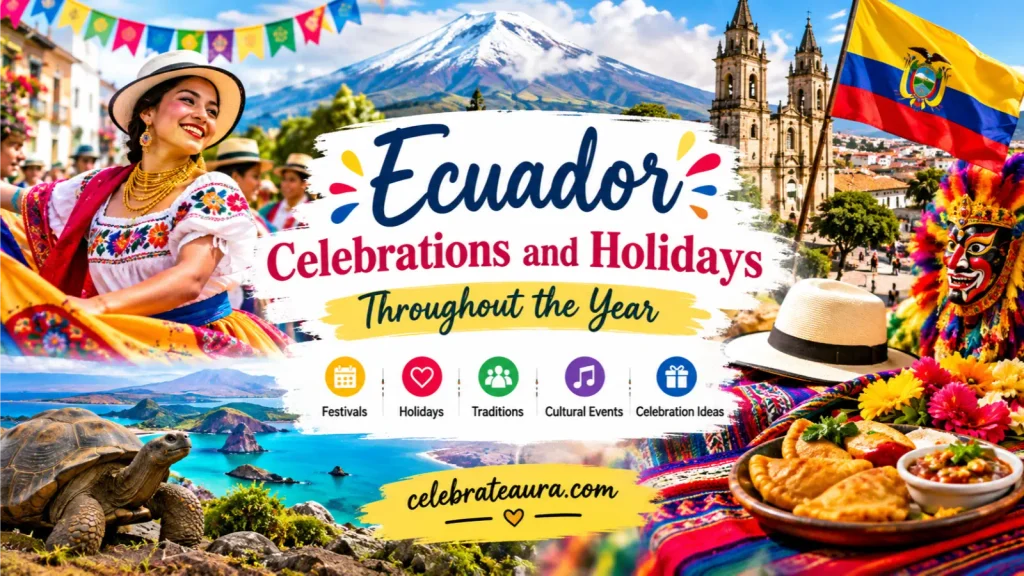
Ecuador Celebrations and Holidays Throughout the Year
The Ecuadorian calendar includes national holidays as well as numerous local and traditional festivities. Some celebrations are connected to independence, religion, agriculture, nature, or community identity.
Here are several important examples:
- New Year: Celebrated with family gatherings, fireworks, music, food, and the well-known tradition of Año Viejo figures.
- Carnival: A major festive period featuring music, food, dancing, water games, parades, and regional traditions.
- Good Friday and Easter: Religious observances are marked by processions, church activities, and family traditions.
- Independence celebrations: Different cities observe their own historic independence dates with parades, cultural events, and public gatherings.
- Inti Raymi: An important Andean celebration associated with the sun, agricultural cycles, gratitude, music, and community.
- Mama Negra: A distinctive festival in Latacunga combining Indigenous, Spanish, and African cultural influences.
- Christmas: Families gather for religious observances, meals, decorations, and community activities.
Therefore, when researching Ecuador celebrations and holidays, it is useful to remember that not every major celebration is a nationwide public holiday. Some of the country’s most memorable events are strongly connected to particular cities or communities.
Famous Ecuador Celebrations and Festivals
Carnival in Ecuador
Carnival is one of the country’s most energetic celebrations. Ecuador Travel describes Ecuadorian Carnival as a combination of cultural traditions connected with Indigenous and European influences, religion, agriculture, nature, food, music, and games.
Different communities celebrate Carnival in their own ways. In some places, visitors can experience parades, dancing, traditional foods, musical performances, and playful water activities.
For a family-inspired celebration, you could create a colorful Carnival gathering with:
- Bright decorations
- Traditional-inspired music
- A family-friendly food table
- Colorful crafts
- A cultural storytelling activity
- A small parade or costume walk
Inti Raymi
Inti Raymi, often called the Festival of the Sun, has deep roots in Andean culture. Ecuador Travel describes it as a June celebration connected with the agricultural cycle, gratitude for the earth, and the abundance produced by the land.
Music, dancing, traditional clothing, and community participation are important elements. The celebration provides an opportunity to learn about Andean history and the relationship between communities, nature, and agriculture.
If you are creating an educational celebration at home, consider pairing a discussion about Inti Raymi with a garden activity, traditional music, or a meal featuring fresh ingredients.
Diablada of Píllaro
The Diablada of Píllaro is another distinctive cultural festival. Traditional masks, costumes, music, dancing, and community participation help create its recognizable atmosphere.
Rather than simply treating the festival as a costume theme, families can use it as an opportunity to learn about the history and symbolism behind Ecuadorian mask-making and folk traditions.
Mama Negra
The Mama Negra festival takes place in Latacunga and brings together Indigenous, Spanish, and African cultural influences. Ecuador Travel notes that the celebration takes place in September and again in November, with the November event connected to Latacunga’s independence festivities.
Music, colorful characters, food, costumes, and street celebrations make the event visually memorable. Its cultural background also demonstrates how different traditions can become part of a shared local identity.
Ecuador Celebrations and Traditions That Bring People Together
One of the most meaningful aspects of Ecuadorian festivities is community participation. Traditional celebrations can involve families, neighbors, performers, food makers, musicians, and visitors.
Ecuador Travel explains that traditional festivals can involve communities gathering in traditional clothing, preparing food together, and honoring the land, ancestors, or patron saints.
Common elements include:
- Shared meals: Food provides an easy way for families to gather and exchange traditions.
- Music and dancing: Local rhythms create an energetic atmosphere and encourage participation.
- Traditional clothing: Clothing can communicate regional and cultural identity.
- Parades: Public processions bring communities together in shared spaces.
- Storytelling: Older generations can pass cultural knowledge to younger family members.
- Crafts and art: Masks, textiles, decorations, and handmade items help preserve cultural expression.
Consequently, Ecuador celebrations and traditions are not simply entertainment. They can also serve as ways to preserve history, strengthen community relationships, and pass knowledge between generations.
Creative Ways to Celebrate Ecuadorian Culture at Home
You do not have to travel to Ecuador to learn from its celebration traditions. A respectful Ecuador-inspired family event can combine food, education, music, crafts, and conversation.
1. Create an Ecuadorian Culture Night
Set up a family evening focused on learning about Ecuador. Display a map of the country, learn about Quito and the Andes, and explore different regional traditions.
Add Ecuadorian-inspired dishes to the table and play traditional music while everyone learns about the country’s cultural diversity.
2. Make Ecuador-Inspired Decorations
Use the Ecuadorian flag colors, yellow, blue, and red, as inspiration for table decorations, banners, balloons, or paper crafts.
Children can create small flags while learning what the national colors represent. This turns decoration into an educational activity.
3. Host a Festival Food Table
Food is an important part of many celebrations. Ecuadorian cuisine includes dishes such as hornado, fritada, ceviche, locro de papa, maito, and other regional specialties. Ecuador Travel highlights the country’s varied culinary traditions and regional ingredients.
For a home gathering, choose a few dishes that are appropriate for your guests and explain their cultural background.
4. Organize a Traditional Music and Dance Session
Music provides an easy way to make a cultural event interactive. Explore Ecuadorian styles such as sanjuanito, marimba, or pasillo.
You can also create a simple family dance activity. The goal should be learning and appreciation rather than attempting to reproduce a community ceremony without context.
5. Create a Family Learning Station
Prepare cards featuring:
- Ecuadorian cities
- Traditional festivals
- Popular foods
- Cultural music
- Indigenous communities
- National symbols
- Important historical events
Then turn the cards into a family quiz. 🎁 This works particularly well for children because it combines celebration with learning.
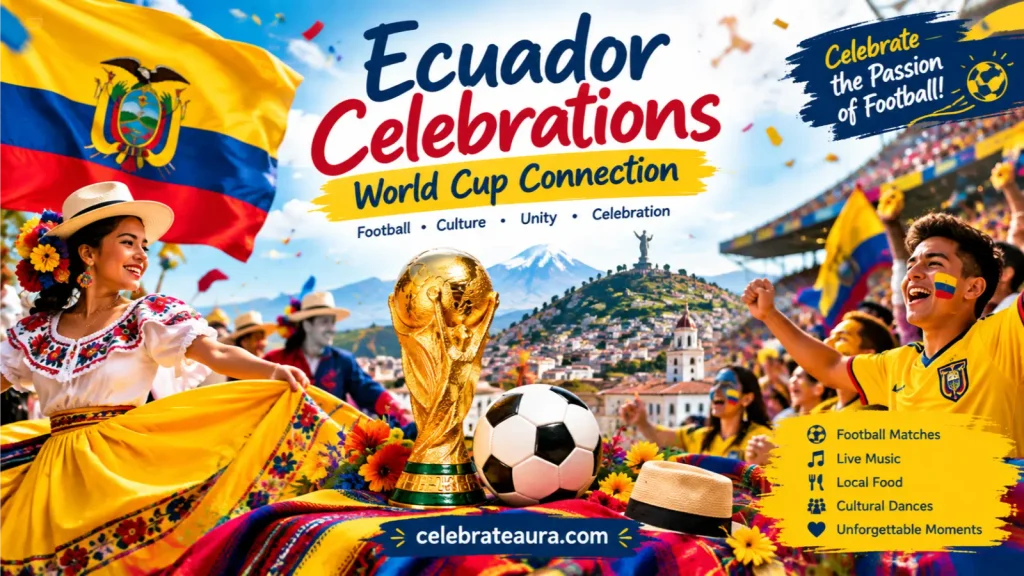
Ecuador Celebrations World Cup Connection
Football has also created memorable moments of national celebration for Ecuadorian fans. During the 2022 FIFA World Cup in Qatar, Ecuador faced the host nation in the tournament’s opening match and won 2–0, with Enner Valencia scoring both goals. FIFA reported strong support from Ecuadorian fans, including supporters who traveled from Ecuador and Ecuadorian communities abroad.
The atmosphere around the Ecuador celebrations World Cup connection demonstrates how sporting events can become occasions for community pride and gatherings.
A football-themed Ecuadorian celebration can include:
- Yellow, blue, and red decorations
- Ecuador-themed snacks
- Family football games
- A match-viewing area
- Ecuadorian music
- Soccer trivia
- Team-inspired photo opportunities
For US families with Ecuadorian connections, this can be a fun way to combine sports with cultural appreciation.
Ecuador Celebrations in September
September is especially interesting for anyone researching Ecuador celebrations in September. The Mama Negra festival in Latacunga has a September celebration organized by local merchants, while another edition occurs in November.
September can therefore be a useful time to explore Ecuadorian cultural events, particularly those connected with Latacunga and regional traditions.
If you are planning a September cultural event in the US, consider making it educational rather than presenting a local Ecuadorian festival as though it were a generic party theme. Explain where the tradition comes from and why it matters.
How to Plan an Ecuador-Inspired Celebration
Planning an Ecuador-inspired gathering can be simple. Start by choosing one cultural focus rather than trying to represent every tradition at once.
Step 1: Choose a Theme
Pick Carnival, Andean culture, Ecuadorian food, football, music, or a general Ecuador culture night.
Step 2: Research the Tradition
Learn about the history and meaning of the celebration before using it as a theme. This helps ensure the event is respectful and informative.
Step 3: Plan the Menu
Choose several Ecuadorian dishes or ingredients that your guests will enjoy. Include vegetarian or allergy-friendly options when needed.
Step 4: Add Interactive Activities
Games, music, crafts, trivia, and storytelling can keep guests involved rather than simply watching a presentation.
Step 5: Finish With a Shared Experience
End the event with a group photo, dance, meal, cultural quiz, or family conversation about something everyone learned.
Why Ecuador Celebrations Are So Colorful and Memorable
The appeal of Ecuadorian festivities comes from their variety. Different communities preserve different histories, foods, dances, musical styles, and rituals.
Ecuador officially recognizes 14 Indigenous nationalities and 18 Indigenous peoples, while the country’s cultural landscape also includes Afro-descendant and Montubio communities.
As a result, there is no single way to describe every Ecuadorian celebration. Instead, the country’s festivals offer a broad picture of how culture can be preserved through community gatherings, food, art, music, faith, nature, and family traditions.
The Final Talk
Ecuador celebrations offer a fascinating look at how culture, family, history, food, music, and community can come together. From the energetic atmosphere of Carnival to the meaningful traditions of Inti Raymi, the Diablada of Píllaro, and Mama Negra, each event tells a different story about Ecuador’s diverse cultural heritage.
For US families, these traditions can also inspire thoughtful cultural celebration ideas at home. You might prepare an Ecuadorian-inspired meal, explore traditional music, create colorful crafts, organize a family quiz, or enjoy a football-themed gathering. Most importantly, take time to learn the meaning behind the tradition you are exploring.
Whether you are planning a cultural night, researching holidays, or simply looking for new celebration inspiration, Ecuador offers plenty of ideas worth discovering. Share what you learn with family and friends, and let every gathering become an opportunity to appreciate culture, connection, and memorable moments.
FAQ’s
The answer depends on the specific date and location because Ecuador has national holidays as well as many regional and local festivals. Checking an official Ecuadorian tourism or government calendar is the best way to identify events happening on a particular day.
Important national and cultural occasions include New Year, Carnival, Easter-related observances, independence holidays, Christmas, Inti Raymi, and regional festivals such as Mama Negra and the Diablada of Píllaro.
September is associated with several regional events. In Latacunga, one edition of the Mama Negra festival takes place in September, while another occurs in November.
Ecuadorian Carnival varies by region but commonly features music, dancing, food, games, parades, and community gatherings. Some traditions also connect Carnival with Indigenous agricultural and seasonal practices.
During the 2022 FIFA World Cup, Ecuadorian supporters gathered in large numbers to support the national team. Ecuador opened the tournament against Qatar and won 2–0, creating a memorable football celebration for Ecuadorian fans.
Discover More Celebration Ideas
Honduras Celebrations: Festivals, Holidays, and Traditions
April Month Celebrations: Holidays, Festivals, and Fun Ideas
Cuba Celebrations: Holidays, Festivals, and Traditions
Garage Celebrations: Shark Tank Update, Reviews & More
Greninja Gold Star Celebrations: Card, Price & Grading Guide