
Mexico is known for colorful traditions, lively festivals, meaningful family gatherings, and unforgettable food. From Día de los Muertos and Mexican Independence Day to Christmas posadas and Cinco de Mayo, celebrations in Mexico bring communities together through music, food, dance, faith, and cultural pride.
If you are wondering about traditional celebrations in Mexico, this guide explores the most important holidays, festivals, and customs you can learn about or recreate respectfully at home.
Learn about innovative Luau Party Ideas and automation
What Are Celebrations in Mexico ?
Celebrations in Mexico reflect the country’s rich blend of Indigenous, Spanish, Catholic, and regional traditions. Some events are national holidays, while others are deeply rooted in particular towns, states, or communities.
Mexican celebrations often include:
- Traditional music and dancing 🎶
- Colorful decorations and papel picado
- Family meals and regional dishes
- Religious ceremonies and processions
- Parades and community festivals
- Fireworks and public gatherings 🎆
- Handmade crafts and traditional clothing
- Storytelling and cultural rituals
Moreover, many holidays are centered on family and community rather than simply entertainment. Therefore, visitors can learn much about Mexican history and culture by understanding the meaning behind each celebration.
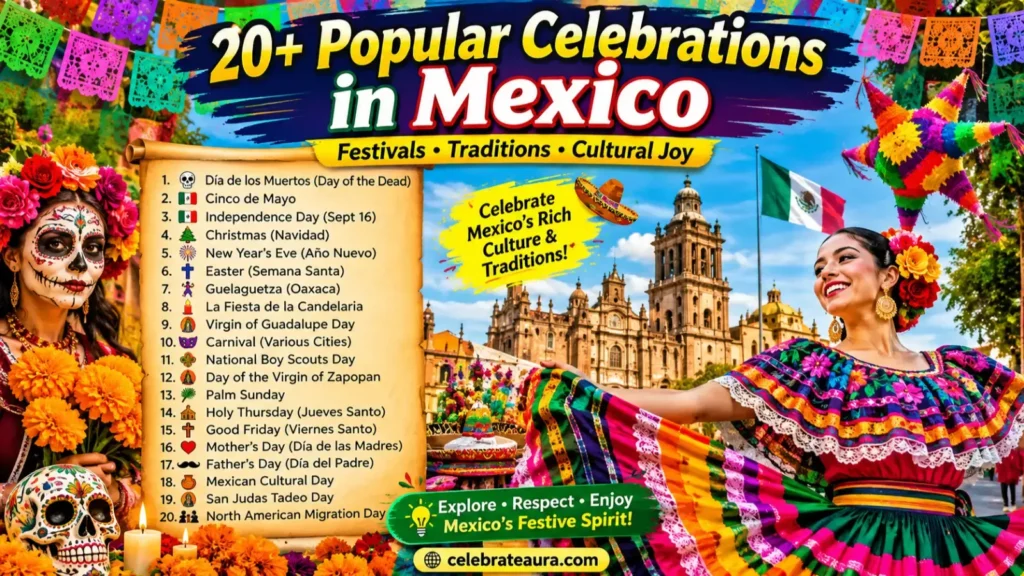
20+ Popular Celebrations in Mexico
There are countless regional festivals throughout the country. However, the following are among the most recognizable cultural celebrations in Mexico.
1. Día de los Muertos — November 1–2
Día de los Muertos, or Day of the Dead, is one of Mexico’s most famous traditions. Rather than being viewed simply as a somber occasion, it is a time to remember and honor loved ones who have died. 💀🌼
Families may create ofrendas, or altars, featuring photographs, candles, flowers, favorite foods, and personal objects. Marigolds, known as cempasúchil, are especially important.
Although customs vary by region, the celebration emphasizes remembrance, family, and the continuing connection between generations.
2. Mexican Independence Day — September 15–16
Mexican Independence Day is one of the biggest national celebrations in the country. Festivities begin on the evening of September 15 with El Grito de Independencia, followed by celebrations, music, fireworks, and gatherings.
On September 16, Mexico officially commemorates the beginning of the independence movement in 1810.
Cities and towns decorate streets with green, white, and red, while families enjoy traditional Mexican foods and patriotic activities.
3. Las Posadas — December 16–24
Las Posadas is a nine-night Christmas tradition held before Christmas Eve. The celebrations traditionally reenact Mary and Joseph’s search for lodging before the birth of Jesus.
Participants may walk in processions, sing traditional songs, light candles, and gather for food and fellowship.
Children often enjoy piñatas, while families share treats such as tamales, ponche, and other seasonal foods. As a result, Las Posadas creates a warm community atmosphere during the Christmas season.
4. Navidad — December 25
Christmas celebrations in Mexico combine religious traditions, family gatherings, food, music, and festive decorations.
For many families, Nochebuena, or Christmas Eve, is especially important. Families may gather for a large meal and attend church services, while Christmas Day continues with family time and gifts.
Common seasonal foods can include tamales, pozole, roasted meats, buñuelos, and ponche, although menus differ significantly by region.
5. Cinco de Mayo — May 5
Cinco de Mayo commemorates the Mexican victory over the French at the Battle of Puebla in 1862.
Interestingly, it is not Mexico’s Independence Day. Instead, the holiday has particular historical significance in Puebla and has also become widely celebrated in the United States.
Modern Cinco de Mayo celebrations in Mexico may include parades, historical reenactments, music, dancing, and community events, particularly in Puebla.
6. Día de la Virgen de Guadalupe — December 12
December 12 honors Our Lady of Guadalupe and is an important religious observance for many Mexican Catholics.
Pilgrims may travel to churches and shrines, while communities organize processions, music, prayers, and gatherings. The Basilica of Our Lady of Guadalupe in Mexico City is a major destination for pilgrims.
7. Día de la Candelaria — February 2
Día de la Candelaria blends religious observance with family tradition. In many households, people gather for tamales and atole.
The holiday also connects with the Mexican tradition surrounding Rosca de Reyes. Those who find the figurine of the baby Jesus in the Rosca may be expected to host or provide tamales for the February gathering.
8. Día de los Reyes Magos — January 6
Three Kings Day is especially exciting for children. Families may celebrate the arrival of the Three Kings with gifts, family meals, and the traditional Rosca de Reyes. 👑🎁
The ring-shaped bread contains hidden figurines, making the tradition interactive and memorable.
9. Guelaguetza — Oaxaca
The Guelaguetza is a major cultural festival associated with Oaxaca. It showcases Indigenous cultures through regional dances, music, costumes, crafts, and food.
Because Oaxaca has remarkable cultural diversity, the festival offers an opportunity to appreciate different communities and their traditions.
10. Feria de San Marcos — Aguascalientes
The Feria de San Marcos is one of Mexico’s best-known fairs. It combines entertainment, music, cultural activities, food, exhibitions, and traditional events.
The festival attracts visitors from across Mexico and beyond, making it an important annual event for Aguascalientes.
11. Day of the Virgin of Juquila
The Virgin of Juquila is particularly important in Oaxaca. Religious celebrations may involve pilgrimages, prayers, music, flowers, and community gatherings.
As with many religious festivals, local customs can vary considerably from one community to another.
12. Festival Internacional Cervantino — Guanajuato
The Festival Internacional Cervantino is a major international arts and culture festival held in Guanajuato.
It features performances and cultural programming involving music, theater, dance, visual arts, and other forms of artistic expression. 🎭🎶
13. Semana Santa — Holy Week
Holy Week is an important religious period for many Mexican communities. Processions, church services, passion plays, and other observances may take place during the week leading to Easter.
The traditions differ from place to place, so travelers should learn about local customs before attending religious events.
14. Día del Niño — April 30
Children are celebrated across Mexico on April 30. Schools, families, and communities may organize games, special meals, activities, gifts, and entertainment.
For families, it can be a wonderful opportunity to create joyful memories together. 🎈🥳
15. Día de la Madre — May 10
Mother’s Day in Mexico is celebrated annually on May 10. Families often honor mothers with flowers, gifts, meals, music, cards, and time together.
Schools may also organize performances or special programs for mothers.
16. Día del Padre — June
Father’s Day is celebrated in Mexico on the third Sunday of June, similar to the United States.
Families may enjoy meals, outdoor activities, gifts, or simple quality time together.
17. Festival de la Guelaguetza
The Guelaguetza deserves another mention because it represents one of Oaxaca’s most important cultural traditions. Its performances highlight regional identities through colorful costumes, music, dance, and community traditions.
For anyone researching popular celebrations in Mexico, this festival provides a fascinating look at the country’s Indigenous heritage.
18. Feria Internacional del Caballo — Texcoco
The International Horse Fair in Texcoco features equestrian traditions, music, food, cultural performances, and entertainment.
It demonstrates how regional celebrations can combine heritage, recreation, and community life.
19. Día de la Revolución — November 20
November 20 commemorates the Mexican Revolution that began in 1910.
Schools and communities may hold parades, performances, historical activities, and patriotic events. Traditional clothing and historical costumes are sometimes part of the festivities.
20. Nochebuena — December 24
Nochebuena is Christmas Eve and is often one of the most meaningful family celebrations of the year.
Families may prepare a large meal, exchange gifts, attend Mass, decorate their homes, and spend the evening together. Therefore, it is an excellent example of how Mexican holiday traditions emphasize family connection.
Find the best Saftey Celebration Ideas online
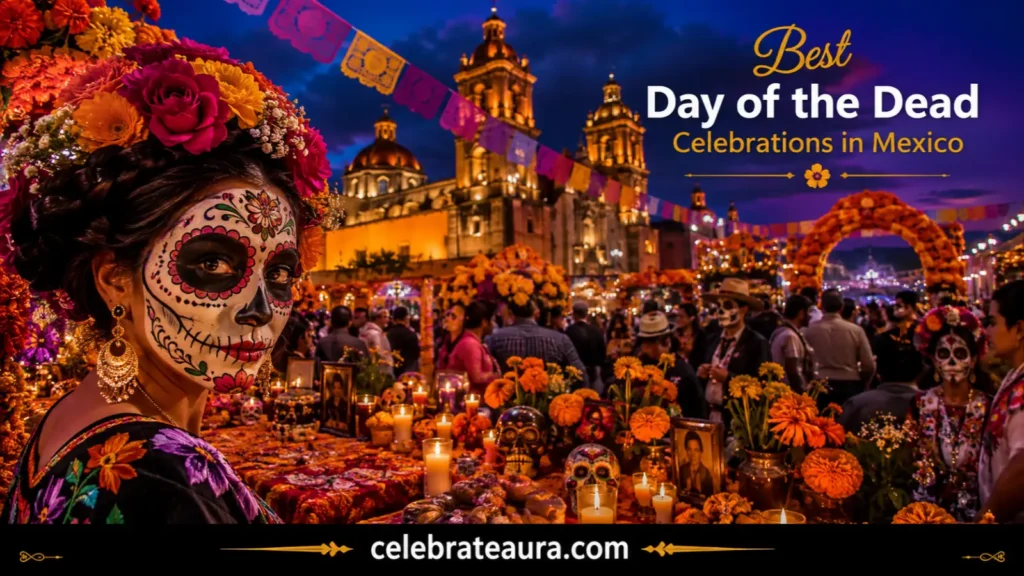
Best Day of the Dead Celebrations in Mexico
If you are searching for the best Day of the Dead celebrations in Mexico, several destinations stand out for their distinctive traditions.
1. Mexico City
Mexico City hosts large public events, parades, exhibitions, decorations, and cultural activities around Día de los Muertos. The city provides a modern urban interpretation alongside traditional practices.
2. Oaxaca
Oaxaca is famous for its rich Day of the Dead traditions. Visitors may encounter decorated cemeteries, altars, processions, music, flowers, and community gatherings.
3. Pátzcuaro and Janitzio
The Lake Pátzcuaro region in Michoacán is especially well known for Indigenous Purépecha traditions associated with Día de los Muertos.
4. Mixquic
San Andrés Mixquic, in the Mexico City area, is another well-known destination for Day of the Dead observances, particularly around its cemetery and community traditions.
When attending these events, remember that Día de los Muertos is a meaningful cultural and family tradition. Consequently, visitors should behave respectfully, ask before photographing people, and avoid treating sacred customs as simple entertainment.
How to Experience Traditional Celebrations in Mexico
You do not have to attend every festival to appreciate Mexican culture. Instead, choose one celebration and learn about its history, food, music, and regional customs.
Here are some ideas:
- Learn the history behind the celebration.
- Try traditional foods connected to the event.
- Listen to regional music.
- Learn about traditional decorations.
- Visit a cultural museum or community event.
- Support local artisans when buying crafts.
- Ask questions respectfully when participating.
- Share what you learn with family and friends.
Additionally, if you are recreating a celebration outside Mexico, focus on learning and appreciation rather than copying sacred rituals without understanding them.
Celebrations in Mexico City
Mexico City is one of the best places to experience large-scale festivals and national traditions. Throughout the year, residents and visitors can encounter parades, cultural exhibitions, religious observances, concerts, food events, and seasonal decorations.
The city is particularly notable for its Día de los Muertos activities, Independence Day festivities, and December celebrations.
However, Mexico City is only one part of Mexico’s cultural landscape. Regional festivals in Oaxaca, Michoacán, Puebla, Jalisco, Yucatán, and other areas can have completely different traditions.
Explore smart Work Celebration Ideas Every Team for businesses
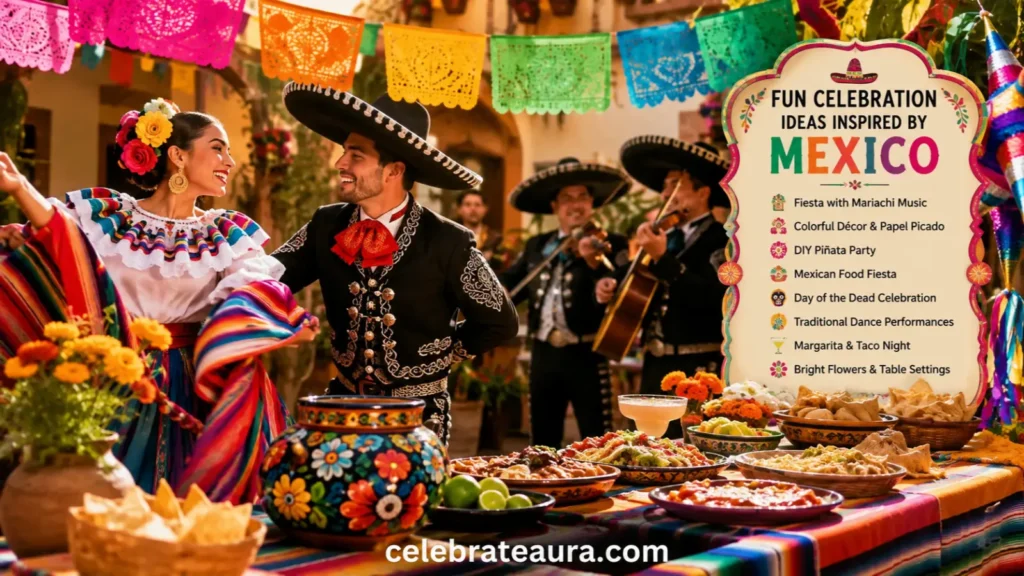
Fun Celebration Ideas Inspired by Mexico
Want to bring Mexican-inspired festive energy to a party in the United States? You can create a respectful celebration inspired by Mexican food, colors, music, and hospitality.
Try these ideas:
- Decorate with colorful papel picado-style banners.
- Serve tacos, tamales, or other Mexican-inspired dishes.
- Play Mexican folk or regional music.
- Create a colorful dessert table. 🎂
- Use bright flowers as table decorations.
- Organize a cultural trivia game.
- Teach guests about the history of the celebration.
- Make a non-religious craft inspired by Mexican folk art.
- Create a festive photo area.
- Share interesting facts about different Mexican regions.
Most importantly, explain the cultural background behind your theme. That small step can turn a decorative party into a meaningful learning experience.
Traditions and Celebrations in Mexico: What Makes Them Special?
What makes Mexican festivities especially memorable is the strong connection between celebration and community. Food is shared, stories are passed between generations, music fills public spaces, and families often participate together.
Furthermore, Mexican celebrations demonstrate that traditions do not all look the same. A holiday may have different foods, dances, decorations, and customs depending on the state or community.
That regional diversity is one reason celebrations in Mexico are so fascinating for travelers, families, educators, and anyone interested in cultural traditions.
The Final Talk
From Día de los Muertos and Independence Day to Las Posadas, Navidad, Guelaguetza, and regional festivals, celebrations in Mexico offer a colorful window into the country’s history, family values, faith, food, music, and community spirit. Each tradition has its own story, and many celebrations change depending on the region, community, and family.
Whether you are planning a Mexican-inspired party in the United States, researching a cultural holiday, or preparing for a trip, take time to understand the meaning behind the festivities. Instead of focusing only on decorations or food, learn the history and appreciate the people who preserve these traditions.
Above all, approach cultural celebrations with curiosity and respect. Try a traditional recipe, listen to regional music, explore Mexican history, or share what you learn with your family. With thoughtful planning, these traditions can inspire meaningful experiences while encouraging greater appreciation for Mexico’s incredible cultural diversity.
People Also Ask About Celebrations in Mexico
Some well-known celebrations include Día de los Muertos, Mexican Independence Day, Las Posadas, Navidad, Día de los Reyes Magos, Cinco de Mayo, and Día de la Virgen de Guadalupe.
Major celebrations include Mexican Independence Day, Día de los Muertos, Christmas traditions, Holy Week, and Día de la Virgen de Guadalupe. Their importance can vary by region and community.
Oaxaca, Mexico City, Pátzcuaro, Janitzio, and Mixquic are among the destinations known for distinctive Día de los Muertos traditions and public events.
Mexico observes national holidays and numerous cultural and religious celebrations, including Independence Day, Revolution Day, Día de los Muertos, Christmas, Holy Week, and Three Kings Day.
Three major examples are Día de los Muertos, Mexican Independence Day, and Las Posadas. Each represents a different aspect of Mexican history, culture, family, or religious tradition.
Discover More Celebration Ideas
Celebration of Life / Memorial Best Ideas for a Meaningful Tribute
Best 5th Birthday Party Ideas for Kids
Sweet Sixteen Party Ideas: 15 Fun Ways to Celebrate in Style
Pingback: Celebrations in Spain: Holidays & Cultural Events
Pingback: Cuba Celebrations: Festivals, Food & Family Ideas