
Spain is famous for its lively streets, colorful traditions, delicious food, music, and community gatherings. Celebrations in Spain range from deeply religious observances and national holidays to huge festivals, family traditions, seasonal fairs, and unforgettable local fiestas. For US travelers and families, learning about these events is a wonderful way to understand Spanish culture while finding inspiration for memorable parties and special occasions.
Unlike a single national celebration style, Spain has hundreds of local traditions. Each region and town may have its own patron-saint festival, food event, parade, or cultural tradition.
In fact, Spain’s official tourism website lists more than 250 fiestas and events throughout the year.
What Are Some Celebrations in Spain?
So, what are some celebrations in Spain that are especially well known? The answer includes religious holidays, seasonal festivals, cultural events, and community fiestas.
Some of the best-known examples include:
- Semana Santa (Holy Week) – Major religious processions held in cities and towns across Spain.
- Las Fallas – Valencia’s famous March festival featuring enormous artistic figures, fireworks, music, and celebrations.
- Feria de Abril – Seville’s colorful spring fair filled with music, dancing, traditional clothing, and festive gatherings.
- San Fermín – Pamplona’s famous July festival, recognized for its historic running-of-the-bulls tradition.
- La Tomatina – The famous tomato festival held in Buñol near Valencia.
- Carnival – Particularly famous in Cádiz and Santa Cruz de Tenerife.
- San Juan – A midsummer celebration associated with bonfires and gatherings.
- Christmas and Three Kings – A festive winter season centered around family, food, decorations, parades, and gift-giving.
Spain’s tourism authority describes the country’s festival calendar as active throughout the year, with Christmas, Carnival, Easter, Fallas, the April Fair, San Juan, San Fermín, and La Tomatina among its most recognizable traditions.
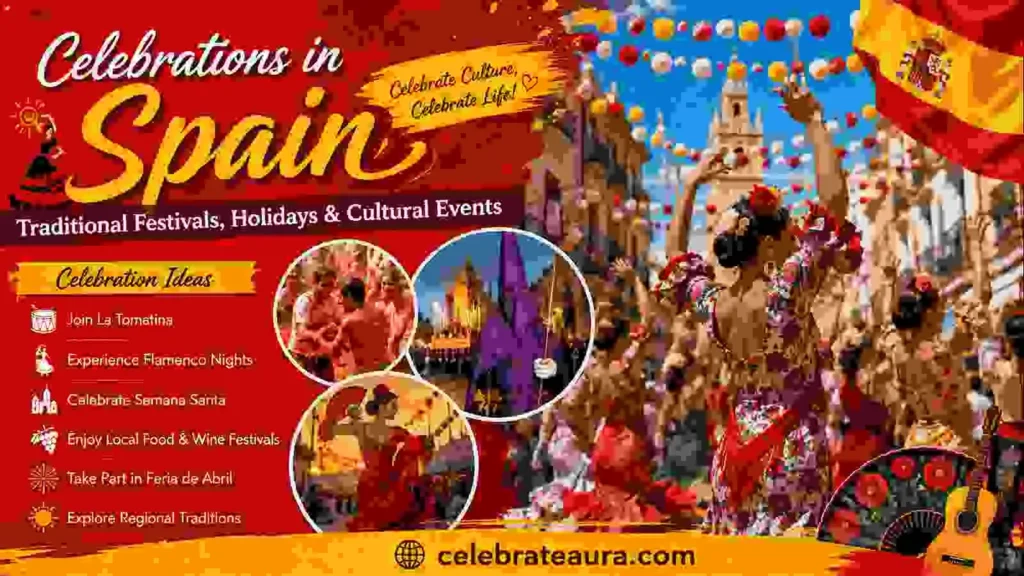
Important Celebrations in Spain Throughout the Year
One of the easiest ways to understand Spanish festivities is to follow the calendar. Different seasons bring different traditions, making Spain an appealing destination for travelers who enjoy cultural events.
January: Three Kings and New Year Traditions 🎁
The Christmas season continues into early January with Three Kings Day, known as Día de Reyes. On the evening of January 5, cities and towns hold colorful Three Kings parades featuring floats, music, performers, and sweets.
The following day, January 6, is traditionally associated with the arrival of the Three Wise Men and gifts for children. The Three Kings tradition is especially important to Spanish holiday culture.
February: Carnival Celebrations 🎭
Carnival brings costumes, music, dancing, parades, and playful performances to communities throughout Spain.
The Carnival celebrations in Cádiz and Santa Cruz de Tenerife are among the country’s best known. They demonstrate how local communities can develop distinctive traditions while still sharing the broader spirit of Spanish fiesta culture.
March: Las Fallas in Valencia 🎆
Las Fallas is one of the most visually impressive traditional celebrations in Spain. Valencia becomes filled with enormous artistic figures and elaborate displays before the festival reaches its dramatic conclusion.
The event combines creativity, community participation, music, fireworks, food, and street gatherings. For anyone looking for celebration inspiration, Las Fallas shows how public art can become the centerpiece of a major cultural event.
March or April: Easter and Semana Santa ✝️
Easter celebrations in Spain are deeply connected with Semana Santa, or Holy Week. Although dates change each year, processions take place across many Spanish cities and towns.
Seville, Málaga, Valladolid, Salamanca, León, Zamora, Cuenca, and Cartagena are among the places known for their Holy Week traditions. Religious images are carried through the streets, while music, processions, and local customs create a solemn atmosphere.
For travelers interested in Semana Santa celebrations in Spain, it is important to remember that each location has its own customs and character. Therefore, experiencing Holy Week in Seville can feel quite different from experiencing it in another Spanish city.
April: Feria de Abril 💃
Seville’s April Fair brings together music, dancing, traditional clothing, food, and decorated fairground spaces. Many people associate the event with flamenco-inspired outfits, lively social gatherings, and festive casetas.
The official Spanish tourism site notes that the fair includes hundreds of stands and combines music, dancing, costumes, and celebration.
For a US-style party inspired by the event, consider colorful decorations, Spanish-inspired food, floral accents, guitar music, and a dance-friendly atmosphere.
June: San Juan Bonfires 🔥
San Juan is associated with midsummer celebrations in several parts of Spain. Bonfires, gatherings, music, and nighttime festivities create a distinctive summer atmosphere.
A celebration inspired by San Juan can focus on safe outdoor decorations, lanterns, music, seasonal snacks, and family-friendly games rather than attempting to reproduce every local tradition.
July: San Fermín in Pamplona 🥳
San Fermín is one of the most internationally recognized Spanish festivals. Held in Pamplona, it combines religious traditions, parades, music, public celebrations, and other cultural activities.
The festival is particularly famous internationally because of the running-of-the-bulls tradition. However, visitors should understand that this is a historic local practice involving significant risk and is not something to imitate as a party activity.
August: La Tomatina 🍅
La Tomatina in Buñol is among the most unusual and recognizable festivals associated with Spain. It is traditionally held in August and attracts international attention.
As of August 25, 2026, Spain’s official tourism calendar lists La Tomatina for August 26, 2026.
If you’re researching celebrations in Spain today, checking an official event calendar is the best approach because local fiestas vary by date and location. Spain’s tourism events calendar provides current listings by theme, month, and province.
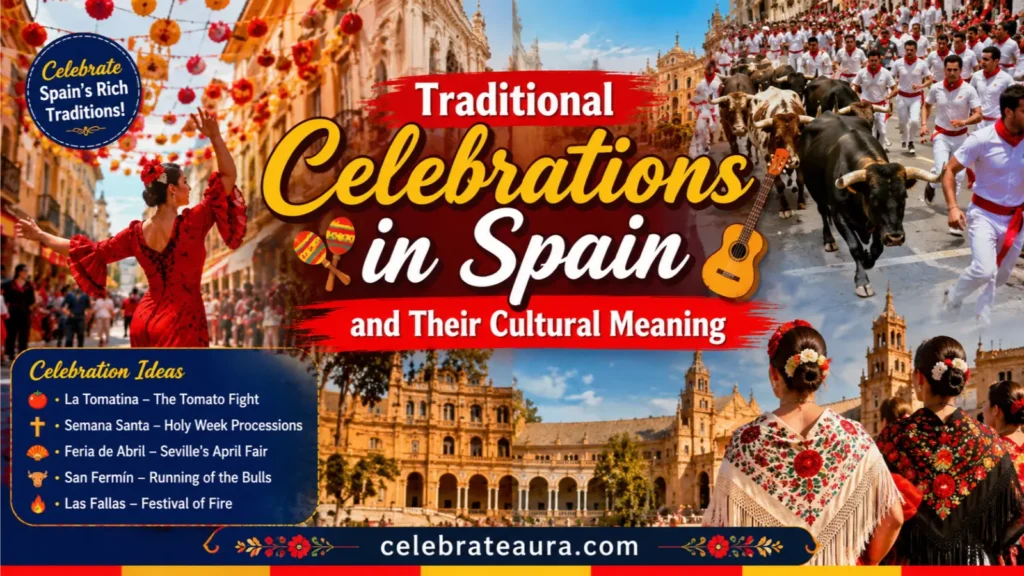
Traditional Celebrations in Spain and Their Cultural Meaning
Traditional celebrations in Spain are more than colorful parties. They often connect families and communities with history, religion, regional identity, food, music, art, and local customs.
For example, some celebrations emphasize:
- Religious devotion and historic traditions
- Regional music and dance
- Traditional clothing
- Local foods and seasonal ingredients
- Community parades
- Handmade decorations and public art
- Family gatherings
- Patron-saint traditions
- Cultural storytelling
- Seasonal changes
As a result, cultural celebrations in Spain can provide travelers with a deeper understanding of the country beyond its famous landmarks.
Christmas Celebrations in Spain 🎄
Christmas is one of the most important holiday periods in Spain. Streets and plazas are commonly decorated with lights, Christmas markets, nativity scenes, and seasonal displays.
Christmas celebrations in Spain also include traditions that may be familiar to Americans as well as customs that are especially Spanish.
One particularly famous New Year’s Eve tradition involves eating 12 grapes, one with each midnight clock chime. The custom is associated with good fortune for the coming year. Madrid’s Puerta del Sol is especially well known for its New Year’s Eve gathering.
The Christmas period then continues toward Three Kings celebrations in early January.
5 Best Famous Celebrations in Spain for Travelers
If you are planning a trip around a festival, consider choosing an event based on the experience you want.
1. For religious and historic experiences
Choose Semana Santa for processions, traditional music, historic customs, and religious culture.
2. For colorful street celebrations
Choose Carnival, Las Fallas, or a major local fiesta.
3. For food and social experiences
Look for regional fairs, harvest festivals, food markets, and local celebrations.
4. For family-friendly holiday atmosphere
Christmas markets, nativity displays, Three Kings parades, and seasonal events can provide memorable experiences.
5. For major international festivals
San Fermín and La Tomatina are among the events that attract visitors from around the world.
Spain’s official tourism calendar is particularly useful because festivals are distributed across many regions rather than concentrated in only Madrid or Barcelona.
Top 8 Holidays and Celebrations in Spain: Ideas for Your Own Party
You do not have to travel to Spain to enjoy inspiration from Spanish traditions. A Spanish-inspired gathering can be adapted into a family party, birthday, dinner, or cultural night.
Try these ideas:
- Choose a Spanish-inspired color palette with warm, festive tones.
- Decorate with flowers and simple Mediterranean-style accents.
- Create a Spanish food table featuring tapas-style appetizers and desserts.
- Add Spanish guitar or upbeat Spanish music to create atmosphere.
- Set up a cultural trivia game about Spanish cities, foods, landmarks, and traditions.
- Create a mini festival corner with paper fans, banners, and colorful table decorations.
- Include a travel-themed photo area inspired by famous Spanish destinations.
- Serve non-alcoholic drinks such as sparkling fruit beverages or citrus refreshments.
Most importantly, treat cultural traditions respectfully rather than turning sacred or historic practices into costumes or stereotypes.
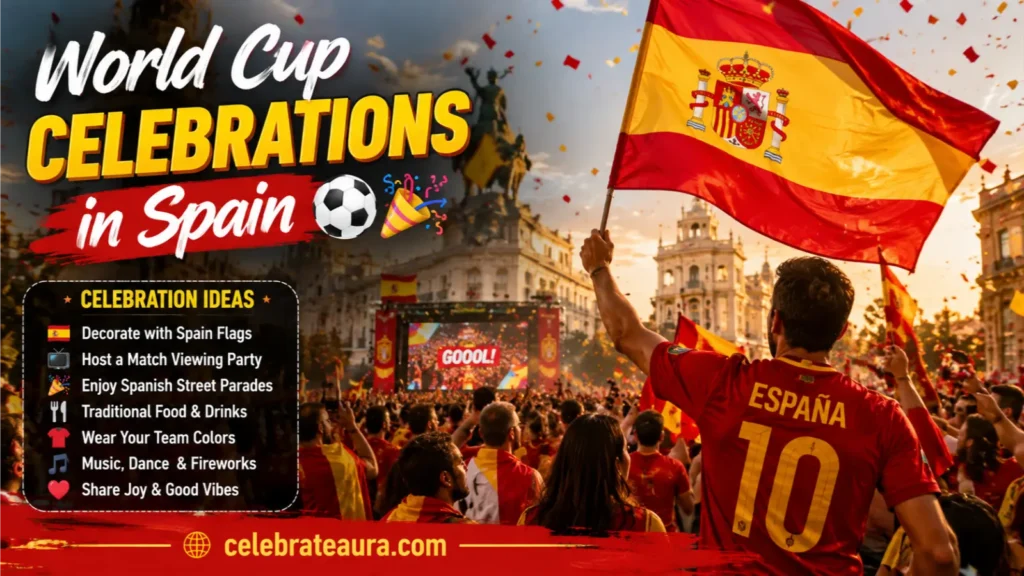
World Cup Celebrations in Spain ⚽🎊
Football has a special place in Spanish popular culture, so major international victories can create enormous public excitement.
World Cup celebrations in Spain can include fans gathering in public spaces, waving flags, wearing team colors, singing, and celebrating together. For a Spain-inspired football party at home, you can create a simple viewing setup with themed decorations, snacks, football trivia, and family-friendly games.
If you’re searching for celebrations in Spain World Cup events, remember that the exact atmosphere depends on whether Spain is participating, advancing, or winning a major tournament. Current sports schedules and results should always be checked close to the event.
How to Experience Celebrations in Spain Respectfully
When attending a Spanish festival, a little preparation can make the experience much better.
- Check the official festival dates before traveling.
- Learn whether the event has religious significance.
- Respect local customs and public spaces.
- Arrive early for major parades and public events.
- Follow local safety instructions.
- Dress appropriately for the season and event.
- Try regional foods and support local businesses.
- Avoid assuming every Spanish region celebrates in the same way.
Because Spain has strong regional identities, traditions can differ considerably from one city or province to another.
The Final Talk
Celebrations in Spain offer a fascinating combination of history, culture, religion, food, music, family traditions, and community spirit. From the solemn processions of Semana Santa and the artistic spectacle of Las Fallas to the colorful Feria de Abril, summer fiestas, Christmas traditions, and Three Kings parades, there is something to discover throughout the year. 🎉
For US travelers, these traditions can turn an ordinary trip into a meaningful cultural experience. Likewise, families at home can borrow inspiration through Spanish-themed dinners, colorful decorations, music, cultural games, and festive gatherings. However, the best approach is to appreciate each tradition in its local context and respect its cultural or religious meaning.
Whether you are planning a trip, researching Spanish culture, or creating your own celebration theme, Spain provides plenty of inspiration. Explore different regions, learn about their customs, and choose ideas that genuinely connect with your guests. Most importantly, celebrate with curiosity, respect, and joy. ❤️
Frequently Asked Questions
Some of the best-known include Semana Santa, Las Fallas, Feria de Abril, Carnival, San Fermín, San Juan, La Tomatina, Christmas, and Three Kings celebrations. The best choice depends on whether you prefer religious traditions, cultural events, food, music, family activities, or large public festivals.
Start with colorful decorations, Spanish-inspired food, music, flowers, cultural trivia, and a relaxed social atmosphere. You can also choose one regional tradition as your theme instead of combining too many different customs.
They bring together history, community, music, food, religion, art, and regional identity. Additionally, many festivals involve public spaces and traditions that have developed over generations, giving visitors a strong sense of local culture.
Yes. You can share original photos, travel experiences, party inspiration, cultural facts, decoration ideas, or your own Spanish-themed event. For better engagement, consider using short videos, carousel posts, festival-inspired designs, and questions that encourage people to share their favorite traditions.
Absolutely. Spanish-inspired greeting cards can work especially well for birthdays, holidays, travel announcements, cultural events, and festive invitations. Simple phrases such as “¡Feliz celebración!” can add a Spanish touch while keeping the message easy to understand.
Discover More Holiday Celebration Ideas
Celebrations in Mexico: 20+ Vibrant Traditions, Holidays & Festivals
June Celebrations: Fun Holidays, Festivals & Ideas
Virtual Holiday Party Ideas That Actually Feel Festive
Pingback: Garage Celebrations: Shark Tank Update & Reviews